Wednesday, 11 September 2013

Album review: Neils Children - Dimly Lit

What a difference a decade makes. Ten years ago Neils Children were a raging ball of angular, gnarling proto-punk that took aim at superficiality and rampant consumerism. Even today, their debut EP Change/Return/Success remains an astonishingly ferocious collection of anti-societal matter. Yet fast forward to 2013 and that edge is gone. Long gone.

Album number three, Dimly Lit, represents a disappointing calming of the soul for the London ensemble; a sad realisation that youth has passed and ageing is inevitable. The strangulating guitars have vanished, replaced by woozy, carousel dreamscapes like “Never Could be Any Other Way”; while seething hostility has been superseded by humdrum 60s psychedelia like “Trust You” and the lamentable “Warm Wave”.

We've seen this all before, of course. But the Horrors’ accession into shoegaze was always a natural next step. Sadly, Neils Children are much less durable. Their day and decade appears to be done.

Album review: Man Man - On Oni Pond

Man Man are nothing if not adventurous. Over the course of their ten year career the Philadelphia-based beat-freaks have proved little extends beyond their musical reach, consistently producing records which underline the quintet’s frenetic experimental tendencies, while displaying an impressive insight into matters of the soul.

For album number five, Ryan Kattner (also known as Honus Honus, Man Man’s piano-tinkling frontman) has reinstated the melancholic undertones that permeated 2010’s Life Fantastic. But, musically, On Oni Pond has a greater energy than its predecessor, focusing more on the possibilities of life than the final flag of death.

What ensues is a record awash with eclecticism. Tonally, it covers an extraordinary distance across the space of 13 tracks: from the brass-swelling bar brawl of “Loot My Body”, to the angular funk guitars of “Pyramids” and onwards to the bare bone declaration of “Deep Cover”.

At all times, Kattner’s gravelled croon leads the sonic concoction. His deep, gut-churning grunt rumbles through moribund haze of “Head On” with Tom Waits-like wisdom, while his sneering parables transcend the funk-stained guitars of “Paul’s Grotesque” into a lecherous slab of choleric psych-rock.

As aurally impressive and immaculately produced as you’d expect, these 45 minutes do much to surmise Man Man’s career to date. Sure, it treads little new ground, but this is a band that’s done more than enough boundary pushing in its lifetime to earn a little slack. Sometimes, even the most adventurous souls need to take it a little easy.

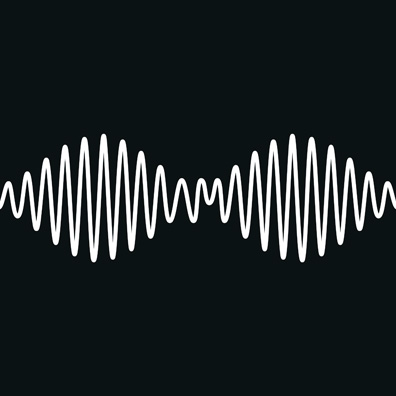
Album review: Arctic Monkeys - AM

Arctic Monkeys have come a long way since their debut LP Whatever People Say I Am, That's What I'm Not dropped. Back in 2006 they were four fresh-faced Sheffield kids dousing snappy, colloquial couplets over irresistible hooks.  Fast forward seven years and the Alex Turner-led ensemble has opened the Olympic Games, sold bucket-loads of records across the globe, and been restyled as quiff-sporting teddy boys straight from a GQ cover shoot.

 Despite the fame, you wouldn't accuse the Monkeys of selling out. Even though he calls L.A. home these days, Turner continues to narrate yarns of everyday life with his sardonic steelworker drawl, while the band's rocket-fuelled rock remains intact, albeit beefed up like a weight-lifting gym addict with a steroid problem. 

Album number five, AM, will continue this escalation into stadium-filling behemoths. Calling on support from the likes Josh Homme, Bill Ryder-Jones, and punk-poet John Cooper Clarke, the Monkeys have pulled off their most technically adroit and controlled recording of their career. Whether that's a good thing for longstanding fans is another matter.

 In truth, AM is as sexy as Arctic Monkeys have ever been. Stacked with falsetto harmonies and moody atmospherics, "One For the Road" and "Fireside" are all intense eyes and smoky pickup lines; the closing swoon "I Wanna Be Yours" has Turner cooing "I want to be your vacuum cleaner" with soppy affection; and "No 1 Party Anthem" is as earnest and love struck as an Elton John piano ballad. T

he clang of lead single "Do I Wanna Know?" and "R U Mine?" are about as close as it gets to the riotous rides of old. But it's impossible to compare today's Arctic Monkeys with its original incarnation. That was a band hungry for success. This one is starting to get a bit bloated.

First published here for Under the Radar 

Monday, 19 August 2013

Album review: Fuck Buttons - Slow Focus

They may not have medalled, but for Fuck Buttons, the 2012 Olympic Games in London were a career high. Despite their less-than-radio-friendly moniker, the duo from Bristol, England were catapulted onto the international stage via Danny Boyle's masterful opening ceremony, which revisited the U.K.'s cultural highs and lows in front of an audience of billions.

Strangely enough, soundtracking a nation's industrial ontogeny worked. The piston beats and scarring synth lines of "Surf Solar" and "Olympians" from 2009's ambitious Tarot Sport finally had a contextual outlet. It was, in every sense, a fascinating and unexpected triumph.

For album number three, Slow Focus, Fuck Buttons have continued the tectonic plate shifting of previous endeavours. Their dark, enclosing signature is stamped all over this industrial affair, producing a highly technical record laced with glacial hints of melody.

While it's hardly the warmest listen, the juddering topography of tracks such as barbarous opener "Brainfreeze" and frazzled "Prince's Prize" make for a heavyweight 50 minutes. Each track is intent on overpowering the ear with a combination of mammoth percussion and screwdriving electronics.

Despite being their first self-produced long-player, this is far from new territory. And without visual stimulation to accompany the surging volts of "The Red Wing" or "Hidden XS," it's a record that's all too easy to phase in and out of. At times the arrangements seem to meld into one vastly stacked and impenetrable mountain range of sound.

Of course, this isn't entirely a bad thing. Slow Focus is exactly what you'd expect from a Fuck Buttons effort: it's brusque, overwhelming and complicated. But for a band so intent on pushing boundaries, this is a strange, almost faltering, sidestep. A place on the podium remains out of reach. (www.fuckbuttons.com)

First published here for Under the Radar

Album reivew: Wiseblood - id

When Chris Laufman blasted onto the indie scene in 2011 it felt like a star was rising. The Pittsburgh producer/vocalist's efforts under the Wise Blood moniker raced to a fusion of beats, bleeps and bombast, culminating in the remarkable These Wings EP. At that point, the future was Laufman's for the taking. And then he vanished.

Two years on and Laufman has finally resurfaced. In many ways, it's like he's never been away. His debut LP retains the chaotic principles of his early work: "Target" is a hop-scotching, jazz-tinted nod to his favourite department store; "Spider Web" mixes Middle-Eastern shades with street-born depravity; and "Consumed" is an inspired segue of choral samples and snare drum percussion.

Sure, an indolent flutter of disinterest seeps through "AM 1020," but this is a record that comes close to realising the vision Laufman laid out two years ago. His star is finally back on track.
(www.facebook.com/hazemotes)

First published here for Under the Radar


Album review: Postiljonen - Skyer

Despite their Scandinavian roots, hotly tipped trio Postiljonen aren't exactly what you'd call a winter band. The airy soundscapes and melting synth lines of the trio's debut long-player swoon to the romantic, carefree chords of a late summer evening that stretches on until dawn.

Across these 11 tracks, the dreamy pop ensemble produces a slew of sun-kissed melodies that lie somewhere between the cloud-walking ambition of the underrated Air France and the grandiose atmospherics of every aspirational '80s pop outfit you can think of. If you're looking for something gnarly, Skyer is not it—these are sounds for sentimental souls.

Underpinning the gentle ambience is vocalist Mia Bøe. Her crisp, ceramic tones tease opening number "Help" into a breezy choral bliss; she exhales a heavenly harpsichordal mew over the tapestry of "Supreme"; and album peak "Skying High" finds her scaling jittering M83-like synth l
oops with an elegant nimbleness.

While there's much to admire in these simple moments, this is a record that rarely rises from slumber. Harmony-smothered numbers such as "Plastic Panorama" and "All That We Had Is Lost" are meditative slithers that could soundtrack the most relaxing tai chi session, while "Atlantis" is a dreary, ethereal sigh that trails off into an insufficient finale.

Such Balearic bliss won't appeal to everyone, but Skyer is still capable of leaving a glow of satisfaction, given the right occasion. And with winter's chill not too far away, such a gratifying slab of summer is probably no bad thing. (www.postiljonen.tumblr.com)

First published here for Under the Radar

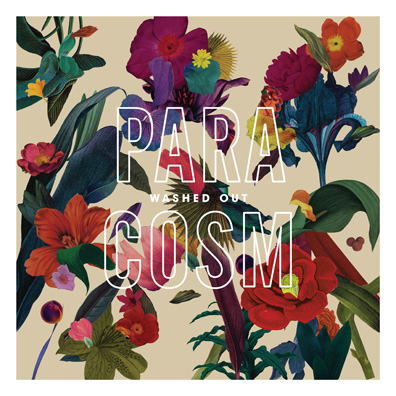
Album review: Washed Out - Paracosm

The biggest surprise about Washed Out's 2011 debut was just how warm it felt. Buried amongst a clamour of too-cool-for-school hypnagogic popstrels Within and Without was a snug, amiable pleasure; the kind of record that greeted listeners with a beaming smile before dousing them in rich sonic textures and gooey melodies.

 Whether that's what its creator Ernest Greene intended is another matter. But given the earthy, amoebic nature of follow-up Paracosm, it's safe to say he is still looking for a way to remove himself completely from the noxious chillwave movement. Inspired by paracosmic literature—a smarty-pants way of saying "books about fantasy worlds"—these 12 tracks extend Greene's foray into amiable, slightly wistful electronic pop splendour.

Here, he builds a record that transmits inter-planetary feelings soaked in coruscating effects and pressureless atmospherics. Each number moves as slowly as a sea of cushions. The gliding undulations of "It All Feels Right" make for a lilting opener that recalls Bradford Cox's more tender canticles; "Great Escape" is a gentle loll, built on graceful drifts of synthesizers; and the title track's haze of keys and strings melt at the sound of Greene's hushed calls.

 With almost every track extending beyond five minutes, it can feel overstretched. The meandering "Weightless" never seems to wake up, while the nimble guitar lines of "Falling Back" fail to spark a final flourish. Yet in the pert jangles of "All I Know" there exists enough zip to prove Greene is capable of shifting through the gears when pushed.

 While not as immediate as its predecessor, Paracosm emits the cozy glow of an artist happy to remain in a comfortable sense of stasis. Giving in to its charms is really all you can do. (www.washedout.net)

First published here for Under the Radar

Wednesday, 26 June 2013

Album review: The Child of Lov - The Child of Lov

Being anonymous in this day and age isn’t easy. For a few months, The Child of Lov admirably retained his anonymity while generating a beehive of buzz around his first two releases. But now, with his debut LP about to drop, Cole Williams has finally come clean. The Amsterdam-based musician’s name is on every hipster’s lips, as is the all star cast that’s helped to cobble these ten tracks together.

Much of the record revolves around a deep sense of malevolency built up through dark rhythmic beats and warped funk sequences. The sinister atmospherics of album opener "Call Me Up" sets the standard, led into a sleazy g-funk corner by the Prince-like falsetto. Off kilter beat-feast "Give Me up” takes this menace further, while the prowling séance of “Days” is accentuated by DOOM's methadone growl.

It’s a luscious sounding effort, coated in creamy layers of production, but numerous ten-a-penny cuts drag it down. Flat out cock-rocker “Heal” is a boneless dirge left helpless by banal lyrics like "do you want to sit with me, I'm your soldier, set me free"; the slow-handed drawl of “Warrior” is just as drab, resembling an overcooked TV on the Radio cast-off; and not even the appearance of Damon Albarn can save the torpid indulgence of "One Day". 

Despite such desolation, Williams finds time to bring in some bounce. The up-tempo “Fly” is a persistent bass-slapper that slinks away to an endemic guitar line. The sauntering rhythm and group-hugging chorus of album swansong "Give It To The People" sounds even finer. If it weren’t for Daft Punk’s Get Lucky it would, unquestionably, be this year’s summer anthem.

While it may not live up to the hype, this is still deeply intriguing debut recording. And now the mask of anonymity has been lifted, Cole Williams can start making a name for himself.

First published in the June/July edition of Under the Radar magazine

Album review: Sweet Baboo - Ships

For a population of just over 3 million, Wales produces an impressive array of acclaimed indie acts. Super Furry Animals, Gorky’s Zygotic Mynci and Manic Street Preachers all belong to the pantheon of Welsh greats and, since releasing his debut LP in 2008, Stephen Black – the singer-songwriter behind Sweet Baboo - has been tipped to join this stellar collection.

Album number four, Ships, should have been Black’s moment. Jammed with quirky horn-led flourishes, it’s a record that will warm the hearts of the more sentimentally disposed. Yet, despite the trumpet-parping sweet spot of “If I Died”, there's a diluted Noah & The Whale feel to many of these troves.

The honeyed twangs of “C'mon Let’s Mosh” and “Chubby Cheeks” are particularly nauseating – each a damning indictment of feeble execution. And while it’s not a complete failure, Ships’ myriad weak points show Stephen Black may struggle to scale those grander Welsh peaks.

First published in the June/July edition of Under the Radar magazine

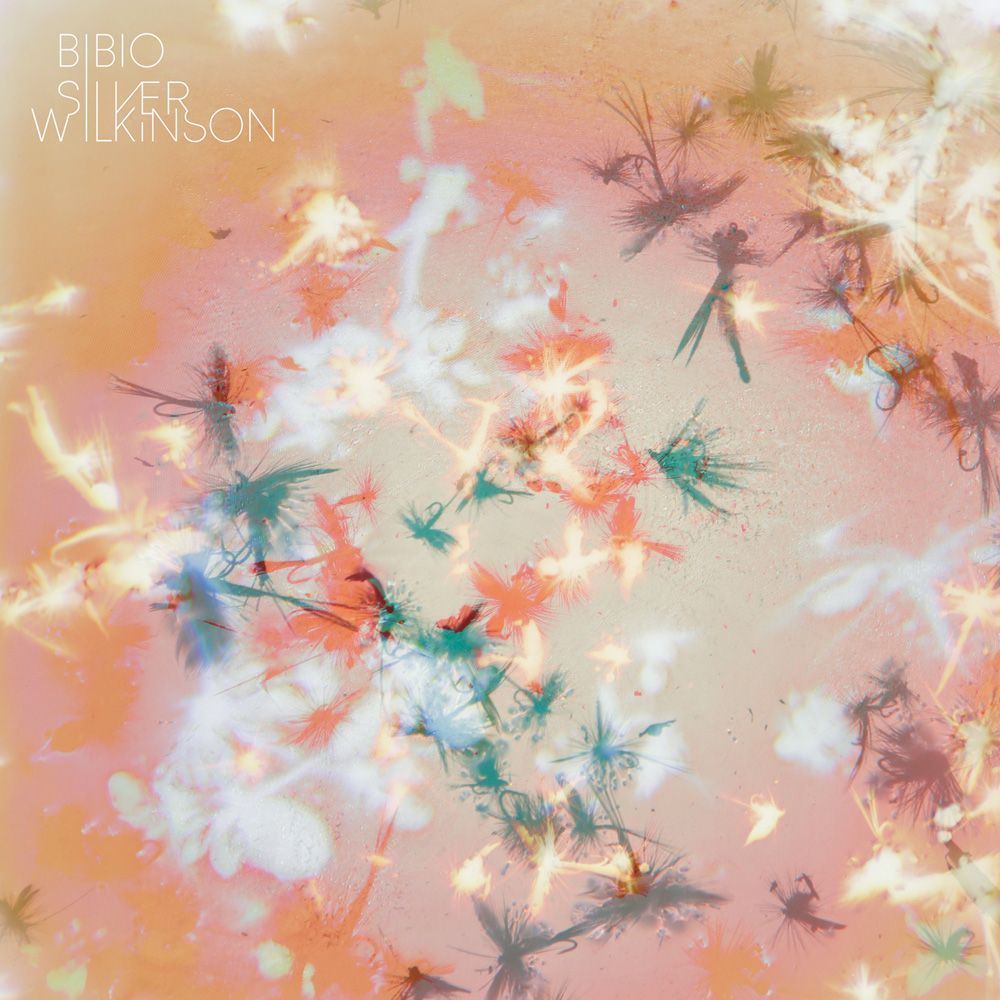
Album review: Bibio - Silver Wilkinson

Stephen Wilkinson appears to be mirroring western trends by going organic. On his seventh LP under the Bibio guise, the English producer’s experimental leanings take on a distinctly naturalistic focus; veering away from the kaleidoscopic blur of 2011’s Mind Bokeh to create slow-burning sonic collection.

In keeping with his previous outings, Wilkinson’s textural approach work remains impressive. Many of these multi-layered compositions unpeel in the ear canals, levering illuminating synth lines against brushing percussion and nimble guitar. Despite – or perhaps because of - the technical showmanship, Silver Wilkinson never really gets going.

Dreary acoustic lullaby “Raincaot” epitomises this curious lack of life, ambling out as a forgettable Seventies hippy dip that wallows in lackadaisical acoustics. “Sycamore Silhouetting” and album finale “You Won’t Remember…” are equally short on substance, sunk by torpid guitar strums that conjure a sloth-like acoustic haze.

Yet with added purpose, it can be a spellbinding trip. “À tout à l'heure” is an elegant rhythmic swing led by tribal percussion and breezy vocal whirls; “Look at Orion!” oscillates with jerking house minimalism; and the cut ‘n’ paste thrum of “You” puffs up like The Avalanches at their hookiest.

These sprightly nods are, however, mere blips on a record that struggles to reach beyond its comfort zone. Going organic may have its advantages, but for Stephen Wilkinson it’s a move that doesn’t come naturally.

First published in the June/July edition of Under the Radar magazine

Wednesday, 19 June 2013

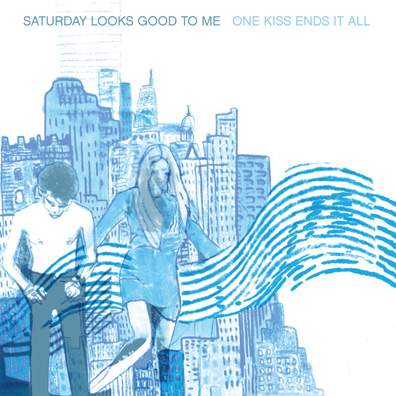
Album review: Saturday Looks Good To Me - One Kiss Ends It All

Over the last decade, Fred Thomas has operated a revolving-door policy that surpasses even Mark E. Smith's (of The Fall). But so far his fluid approach to Saturday Looks Good to Me's line-up has always come up trumps, delivering such vivacious sonic offerings as 2007's excellent Fill Up the Room.

Album number five, One Kiss Ends It All, once again finds the basement-born ensemble's foreman ringing in the changes. Over the course of this 40-minute affair, Thomas hosts a variety of faces old and new to create a record that re-mines a penchant for heart-quivering, brass-plastered arrangements.

 Predominantly delivered through the porcelain intonations of three female vocalists (Carol Gray, Amber Fellows, and the more familiar Betty Marie Barnes), Thomas' latest creation draws on sweetened '60s pop melodies and C86-era indie lilting.

Predictably, what ensues is an album drenched in nostalgia. "Empty Beach" is a Camera Obscura-lite shimmer of guitar chimes and corduroy-clad sensibilities, while "Sunglasses" is a jangling polka-dot pop endeavour that recalls the crystalline splendour of Phil Spector-styled girl groups.

While these breezy charms are easy to embrace, the cutesy retrograde of tracks such as "Negative Space" and the ineffective "Johnny" come off as a weary step backward. And for a progressive like Thomas, that's a worrying development: the cast may be changing, but the sound is beginning to feel all too familiar.

First published here for Under the Radar

Saturday, 15 June 2013

What I was listening to last month: May


Woah, this is a late post. Still, I’ll try and forget that we’re stuck slap bang in the middle of June, and instead look back to what I was listening to last month.

There were a whole heap of records released in May that will no doubt sit in and around the top ten records of 2013 by the time December comes around. Whether they get a place in my top ten is another matter.

The global salivation that greeted Daft Punk’s latest full-length was a tad OTT. It’s a good record, yes, but it hardly seemed groundbreaking. Likewise, The National’s latest effort, Trouble Will Find Me, was in every sense a The National record; morose, enveloping and stacked full of crescendos. Did it surpass the masterpieces of Alligator and Boxer? I don’t think so.

Still, there was much to enjoy last month. I made a trek to Field Day in London where I saw a caught the likes of Animal Collective, Savages, Chvrches, Solange and Django Django. But, the real find of the weekend was Francois and the Atlas Mountains, whose blend of French-tinted pop and intricate math rock motifs created a  limb-shuffling forty odd minutes of rare brilliance.

Finally - against all my better instincts - I fell hook, line and sinker for the new Vampire Weekend record, Modern Vampires of the City. I’ve never really paid too much attention to VW; their Graceland-inspired melodies merely made me want to reach for the actual Graceland. But this new VW offering is a supreme slab of indie intelligence, the likes of which I never imagined they were capable of.

Goes to show that, underneath all the superlatives and verbosity, we critics know very little at all.


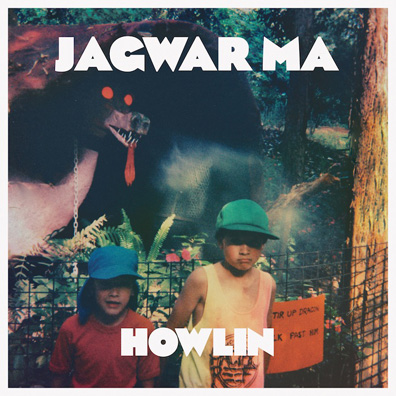
Album review: Jagwar Ma - Howlin'

Back at the tail end of 1980s Britain, things were getting loose. As the vise-like grip of Thatcherism tightened, the cultural reaction was antithetical: tent-sized flares, mind-altering chemicals, all-night raves, and skinny Manchester dudes with bowl cuts were all in vogue. Baggy, as unlikely as it seems, was a kind of non-protest protest against the political ideology of the day.

 In 2013, a revival is improbable—these days our clothes, tunes, and wallets are as tight as our governments' austerity programs—but try telling that to Jagwar Ma. Over the past year the Australian duo of Jono Ma and Gabriel Winterfield has been making a splash with a series of loose-fit grooves that borrow heavily from the flowered-up floors of Madchester.

 Their debut album Howlin continues to burrow into the baggy aesthetic, delivering luminously lit melodies led by anagogic lyrical structures. But to dismiss the pair as pure plagiarists would be unkind; there's an educated ear to this record that runs from the acid house chow of "Four" to the ethereal dream pop gaze of "Backwards Berlin."

 Of course, early singles "The Throw" and "Come Save Me" are album showstoppers, each a livewire of groove-riddled retrograde executed with a modern twist. But the aerated rush of "That Loneliness" is just as enticing, built on sparse guitar jangles and quick-stepping percussion; and slouching dreamscape "Did You Have To" is an effortless, palm-tree swaying lilt of harmonies and chiming keys.

 Despite its pleasures, Howlin struggles to surpass the faint feeling of pastiche that runs through "Uncertainty" and the frankly ridiculous pop flutter "Let Her Go." In the 1980s, the cultural context allowed such flaccid sounds to thrive, but today is not the time to play it loose. Against their better nature, Jagwar Ma are going to have to learn to tighten up.

First published here for Under the Radar

Saturday, 18 May 2013

Album review: Cayucas - Bigfoot

Nothing screams summer quite like indie pop and sunshine, does it? Together, the two are an irresistible combination, soundtracking rose-tinted notions of fun, frolics and whatever else equates to youthful good times these days. It's no wonder so many bands pursue a sun-soaked aesthetic. After all, hit the right vein of ebullient melodies and you're guaranteed a run of upper-billing festival appearances and a relentless sweep of airplay between June and September.

Cayucas are, unquestionably, shooting for this sphere of the indie pop canon. Given the quintet hail from the shores of Santa Monica, California, this shouldn’t come as much surprise; sunshine is in their blood. If ever a band was to embody a baking, breezy day on the beach, they would be it. Up-tempo, infectious indie-pop isn’t just their schtick, it’s what they were made for.

Which is probably a good thing. Because this world’s way too monochrome these days. Think of all the shit we hear about on a 24 hour basis: austerity, poverty, political sleaze, child labour, Nigel-fucking-Farage. Now think about Cayacus’ debut long-player Bigfoot: an aired out flush of romantic jingle-jangling that trades only in subject matter a love-struck school kid could feasibly care about. Sounds refreshing, right? Well, it is. Kind of.

 You see this is an album you can come at from two levels. On the one hand, tracks like ‘Cayucos’ and ‘East Coast Girl’ generate the sort of tropical rhythmic gaze that made Vampire Weekend such a unavoidable proposition in the first place. Each cut is unashamedly pop, filled with chasms of reverb and joyous reels of melody. ‘High School Lover’ is even sweeter, shooting out a fumble of drum and chiming guitars as vocalist Zach Yudin yearns for the memory of a lost mid-school sweetheart.

Yet it’s for these same reasons Bigfoot loses some of its sheen. This is an album filled with throwaway indie pop statements that lack any kind of staying power. Sure, ‘A Summer Thing’ is a gratifying three minutes of swooning piano twinkles, but it hardly rivals 'Wouldn’t It Be Nice'. Likewise, ‘Deep Sea’ is an ornate stroll of sea-shell harmonies and wide-eyed dreaminess, yet when it’s over it’s as forgettable as a watered-down margarita on a package holiday in Cyprus.

And, ultimately, it comes down to what you want from your sun-stroked indie pop. If emotional depth is what you’re after, these eight tracks are never likely to be your bag. But, if you can take Bigfoot for the sun-blushed, sweet-natured collection of songs that it is, then this could be the soundtrack to your summer. All you’d need then is a little sunshine.

Monday, 6 May 2013

Album review: Savages - Silence Yourself

They may be the latest British buzz band, but Savages sure don't sound like one. Rather than mining their home country's rich rock heritage, the current darlings of the U.K.'s indie press pull their energy from the seething, sex-charged sonics of acts like The Birthday Party and Suicide. Judging by the hype that's surrounded them since the release of their inaugural single in 2012, that approach is working.

Over the last year, the London quartet has taken to the road to tighten the towering gothic structures and rabid post-punk squalls that coined all the commotion. Their debut LP Silence Yourself is the fruits of this labour, combining the disarming thrum of their live appearances with a studio-born subtlety that showcases an ear for nuance.

 But this is no easy listen. Singer Jehnny Beth's moribund tones are led by a roar of serrated guitars and the kind of barbarous percussion that never seems to let up. From the opening notes of "Shut Up" the onslaught is relentless: "Husbands" pulverizes, "City's Full" howls, and "No Face" screeches. This is anarchic, itching punk at its most primal, most belligerent.

 In their pre-release press spiel, the band are at pains to state that these 11 tracks are best heard loud—in fact, it's the only way to hear them. The depth and ferocity of sound found on "I Am Here" needs decibels to deliver its full aural assault. Background filler these songs are not: each cut (and they all feel like a cut) is intended to rattle bones from the floor up.

 Perhaps the one chink in Silence Yourself's armor is the darkly veiled drone that turns "Waiting For a Sign" into a mechanical slog. But this is a minor stutter on a record that conjures up something truly unique. That something? A buzz band out-buzzing the buzz.

First published here for Under the Radar